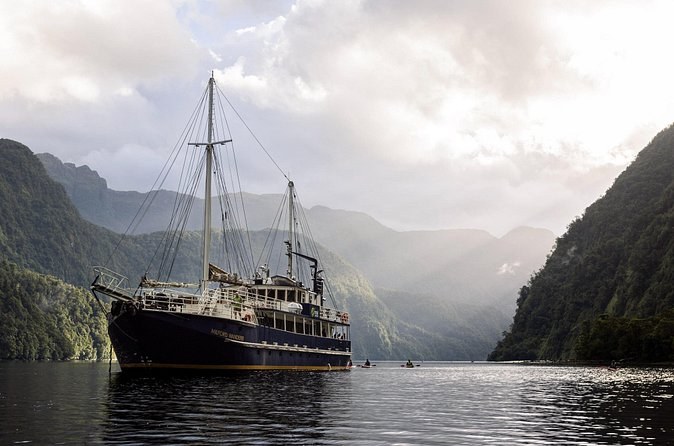
Doubtful Sound Overnight Cruise
About 20 hours on the fiord: an afternoon cruise, a three-course dinner, a cabin at anchor and breakfast on the water. Booked in twos, and non-refundable.
From $462 per person, bookings of two
Check AvailabilityThe best time to visit Doubtful Sound depends on what you want from the day, because the boats sail in every season. If you are picking the best Doubtful Sound tour for your dates, weigh the light, the cold and the crowds, not the rain.
Doubtful Sound gets around 6 m of rain a year, Visit Fiordland says. There is a good chance it will rain when you visit, whichever month you pick. That sounds like a reason to wait. It is not.
Rain is when the fiord walls run with waterfalls. The cruises run in all weather, so a wet day still happens, and you see the place at its loudest. What changes with the season is the cold on deck, the hours of light and how many people share your boat.
Visit Fiordland says the fiord is open in winter too, unless weather affects it, which is not often. So pick your season for what you want to see, then pack for rain anyway.
Winter surprises most people. Visit Fiordland calls it the most settled time of year, often blue and cloudless. Snow sits low on the peaks, and some mornings there is ice on the fiord. Snow can also lie on Wilmot Pass, the 671 m gravel road every day trip crosses.
You pay for that with short days and cold air. Wear thermals under your waterproof, and a hat and gloves for the deck. The winter detail, from the pass to the clothes, is in our winter guide.
These are Visit Fiordland's seasons. Summer and winter are the two extremes: summer for long evenings and warmth, winter for clear skies and snow on the tops. Spring and autumn sit between, with spring the wetter and windier of the pair.
Spring, from September, brings more rain and the unsettled weather of the equinox. Snow can still reach sea level early on. If you want full waterfalls and do not mind wind, it is a strong choice.
Summer gives you the warmest months and the longest days. The southern rata flowers red along the shore, which is why locals call it the Fiordland Christmas tree. It is New Zealand's summer holiday season, so book the date you want.
Autumn is the shoulder season. March is often warm, and it cools towards the end of April. The native forest stays green, though exotic trees in the towns turn colour. What you get on the fiord is mist lying in the arms and cooler mornings and evenings.
| Season | Cruises | Wildlife | Daylight | What to wear on deck |
|---|---|---|---|---|
| Winter | Day cruises, weather permitting; check the overnight's dates | Tawaki breeding season from July | About 8 hours | Thermal layers, hat, gloves, a waterproof |
| Spring | Day and overnight, weather permitting | Tawaki breeding season to November | Lengthening | A waterproof over warm layers |
| Summer | Day and overnight, weather permitting | Tawaki moult, mid-January to early March | About 16 hours | A waterproof, sunscreen, insect repellent |
| Autumn | Day and overnight, weather permitting | Resident dolphins, any month | Shortening | Warm layers for cool mornings |
The day cruises and the overnight sail in every season; every listing says it operates in all weather. The helicopters are the ones the weather decides. They land only if the weather allows, and a flight called off for weather is rebooked or refunded.
Day cruises, the overnight and the flights from Te Anau: compare them for your dates.
The bottlenose dolphins are resident in the fiord, DOC says, so they can turn up in any month. Tawaki, the Fiordland crested penguin, breed from July to November. They moult from mid-January to early March.
No season makes a sighting certain. What helps is time on the water, and the overnight cruise gives you the most of it. The animals themselves are on Doubtful Sound wildlife.
You do not choose the hour of a day cruise; the timetable does. What you can choose is how you spend the morning. DOC says Lake Manapouri can turn rough and choppy, particularly in the afternoons, so an early crossing is often the calmer one.
On the overnight cruise you are on the fiord at dusk and again after breakfast. Those are the hours a day trip never reaches. Month-by-month temperatures and rain are on the Doubtful Sound weather page.
The seasons, the rain, the daylight and the winter opening are Visit Fiordland's; the lake and the pass road are the Department of Conservation's, checked 26 September 2026. The penguin seasons and the resident dolphins are DOC's species pages. What runs in which weather comes from each tour's own listing.
About 20 hours on the fiord: an afternoon cruise, a three-course dinner, a cabin at anchor and breakfast on the water. Booked in twos, and non-refundable.
From $462 per person, bookings of two
Check Availability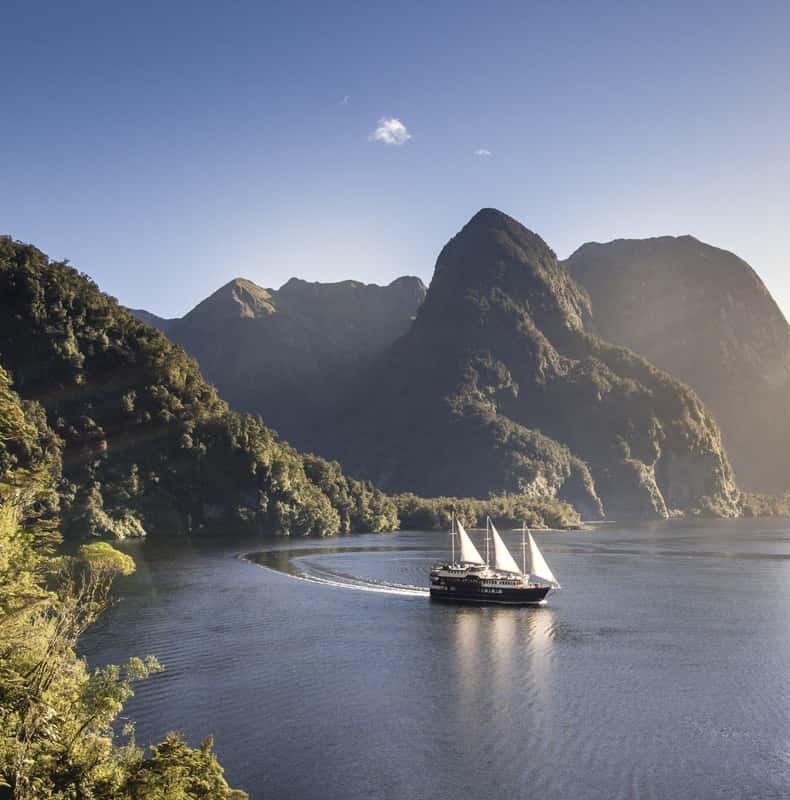
Thirteen hours from 88 Beach Street in Queenstown, with the coach, both boats and the pass in the fare, and a 3-hour cruise on the fiord.
From $271 per person
Check Availability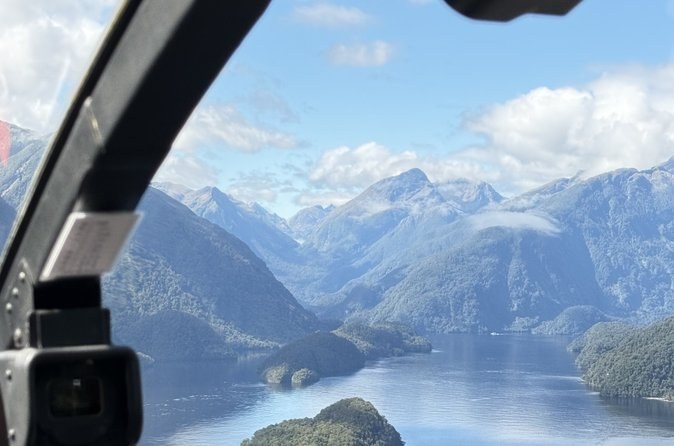
One hour from Te Anau Airport in a helicopter of up to 6: over the lake, across the ranges to the fiord, and a lookout landing if the weather allows.
From $547 per person
Check AvailabilityNext: see the weather by month, read the visitor guide, or compare every tour on Doubtful Sound Tours.