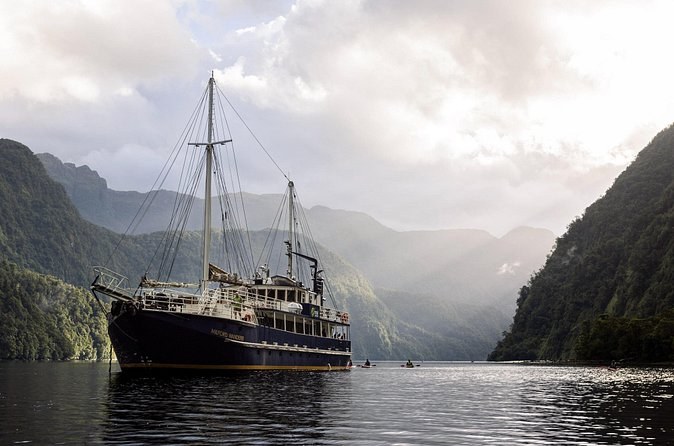
Doubtful Sound Overnight Cruise
About 20 hours on the fiord: an afternoon cruise, a three-course dinner, a cabin at anchor and breakfast on the water. Booked in twos, and non-refundable.
From $462 per person, bookings of two
Check AvailabilityDoubtful Sound / Patea is home to bottlenose dolphins, penguins and fur seals, and the only way to look for them is from the water. If you are choosing a Doubtful Sound boat tour for the animals, here is what lives there, how the boats behave near it, and what no trip can promise.
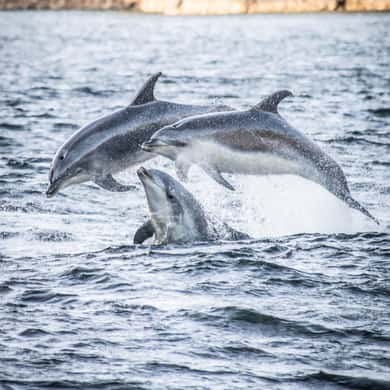
Visit Fiordland says the fiord shelters New Zealand's southernmost population of bottlenose dolphins, and tawaki, the Fiordland crested penguin. Kekeno, the New Zealand fur seal, rest on the rocks. All of them live out on the fiord, far from any road.
You will not see them on a timetable. The animals move with the season and the food, and the boats keep their distance by rule. So go for the fiord, and count any sighting as a bonus.
The seals rest in plain view on the rocks near the open sea when they are there. The penguins are timid and easiest to see in the breeding season. The dolphins are the ones everyone hopes for, and the ones DOC protects most closely.
The Doubtful Sound dolphins fell by a third between 1994 and 2008, DOC says. Since 2008 a code of management has governed every boat on the fiord. Parts of it have dolphin protection zones, reaching 200 m out from the shore.
In the zones: motorised boats do not enter when dolphins are present.
On approach: a boat that is stopped lets approaching dolphins pass before it moves off.
No searching: boats do not seek out dolphins or share their positions by radio.
Speed: five knots or idle inside the zones.
So if the dolphins come to your boat, it is their choice. You may see them close, or not at all. Either way, you have not been short-changed; that is the rule working.
Tawaki are found only in New Zealand, and DOC lists them as declining since the 1950s. They nest in Fiordland and South Westland. Their threats include dogs, stoats and human disturbance.
They are very timid. DOC asks you not to approach birds, nests or beaches where their tracks are common. From a cruise boat you watch from the water, which is the right distance anyway.
Heavy rain lays a permanent layer of fresh water on top of the sea, DOC says, from 5 cm to over 10 m deep. Tannins from the forest stain it the colour of weak tea. It cuts the light, so most marine life lives in the top 40 m.
Below that layer the water is calm, clear and relatively warm. The fiords hold one of the world's largest populations of black coral trees, about 7 million colonies. In inner Doubtful Sound, the Taipari Roa marine reserve covers about 613 hectares around Elizabeth Island.
| Trip | Time on the water | What it gives you |
|---|---|---|
| Day cruise from Manapouri | About 2 hours by the listing | Daylight hours on the fiord |
| Day trip from Te Anau or Queenstown | 2 hours 45 to 3 hours | The same cruise, a longer day |
| Overnight cruise | About 20 hours | Dusk, dawn and the most hours looking |
| Helicopter flight | No time on the water | The shape of the arms, no close views |
| 3-day trip from Queenstown | An overnight cruise | The same night at anchor, plus the caves |
More hours on the water means more chances. The overnight cruise gives you the most, with the fiord at dusk and again after breakfast. A helicopter shows you the fiord's shape, but no animal close up.
The overnight cruise from Manapouri spends about 20 hours on the fiord: compare it with the day cruises.
The dolphins, the protection zones, the penguin, the fur seal, the freshwater layer, the black coral and the marine reserve are the Department of Conservation's, checked 26 September 2026. The southernmost population and the fiord's animals are Visit Fiordland's. The time each trip spends on the water comes from its own listing.
About 20 hours on the fiord: an afternoon cruise, a three-course dinner, a cabin at anchor and breakfast on the water. Booked in twos, and non-refundable.
From $462 per person, bookings of two
Check Availability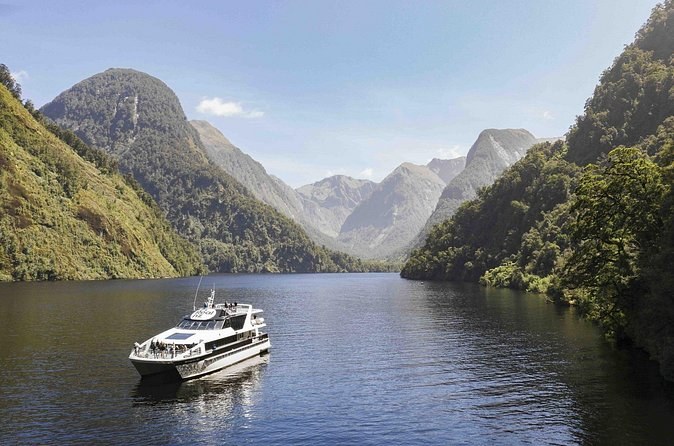
Seven hours from the jetty in Manapouri: the lake by boat, the pass by coach and about 2 hours on the fiord with nature guides. You drive yourself to the start.
From $207 per person
Check Availability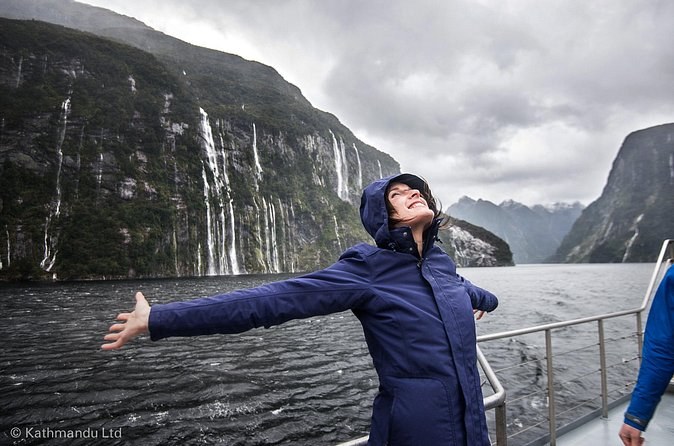
Twelve hours from 88 Beach Street in Queenstown by coach, lake boat and the pass, with a cruise of about 2 hours 45 minutes on the fiord.
From $277 per person
Check AvailabilityNext: see the best time to visit, look at the gallery, or compare every tour on Doubtful Sound Tours.