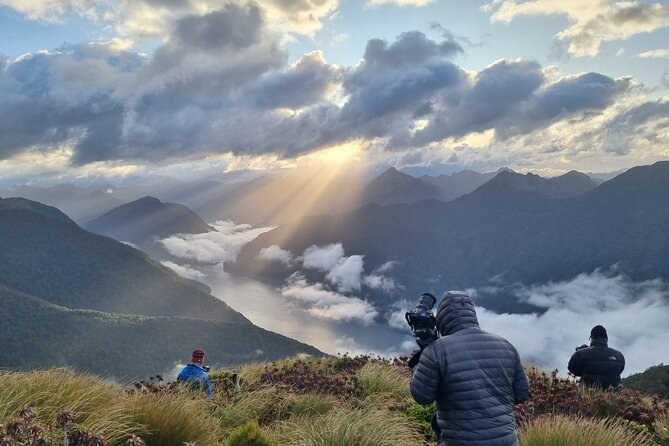
Doubtful And Dusky Sound Helicopter Scenic Flight from Te Anau
Ninety minutes from Te Anau Airport over two fiords, landing above each, with the pilot's commentary through headsets. 120 kg limit per passenger.
From $897 per person
Check AvailabilityDoubtful Sound is one of the wettest places you can visit in New Zealand, and the weather shapes your day more than the timetable. If you are choosing a Doubtful Sound boat tour, read the month you plan to go, then pack for rain whatever it says.
Rain does not stop the cruises. Every listing says it runs in all weather, and a wet day is when waterfalls pour off every wall of the fiord. Visit Fiordland says there is a good chance it will rain when you visit.
What weather can stop is the helicopter. The flights land only if the weather allows, and a flight called off for weather is rebooked or refunded. Book yours early in your stay, so there is time to try again.
Wind matters on the lake. DOC says Lake Manapouri can turn rough and choppy, particularly in the afternoons. On Wilmot Pass, the gravel road can bring heavy snow or rain, DOC warns. The coach drivers cross it every day; you only ride.
The figures are NIWA's long-run normals for West Arm on Lake Manapouri, 1991 to 2020, not a forecast. West Arm is where every trip leaves the lake for the pass. Visit Fiordland puts the fiord itself at around 6 m of rain a year.
Highs average 19.4°C and lows 9.6°C at West Arm. Rain averages about 366 mm. The warmest month, with dawn about 5:30 am and dusk about 9:30 pm. It is also one of the wetter ones. Pack insect repellent for the wharves.
Highs average 19.1°C and lows 9.3°C at West Arm. Rain averages about 249 mm. Still warm, and one of the drier months. Tawaki are moulting ashore until early March. The long evenings suit the overnight cruise.
Highs average 16.8°C and lows 7.8°C at West Arm. Rain averages about 231 mm. The driest month on the normals, and often still warm. Autumn starts, and mornings turn cool on the lake. The forest stays green.
Highs average 13.2°C and lows 5.9°C at West Arm. Rain averages about 275 mm. Cooler mornings and mist in the arms. Visit Fiordland says it cools towards the end of the month. Pack a warm layer.
Highs average 9.7°C and lows 4.1°C at West Arm. Rain averages about 413 mm. The wettest month on the normals. Waterfalls are at their fullest. Autumn mist lies in the arms, and the days shorten fast.
Highs average 6.7°C and lows 1.7°C at West Arm. Rain averages about 271 mm. Winter, the most settled season. Clear, cold days are common. Light runs from about 8:30 am to 4:30 pm, so the day trips start in the dark.
Highs average 6.0°C and lows 0.7°C at West Arm. Rain averages about 329 mm. The coldest month. Snow reaches low levels, and there can be ice on the fiord. Wear thermals, a hat and gloves on deck.
Highs average 7.9°C and lows 1.8°C at West Arm. Rain averages about 254 mm. Still cold, and often clear. Tawaki are in their breeding season. Snow can lie on Wilmot Pass, and the coach crosses it anyway.
Highs average 11.0°C and lows 3.4°C at West Arm. Rain averages about 375 mm. Spring, and the equinox. Wind and rain rise, and the lake can chop up. Snow can still fall to low levels.
Highs average 13.2°C and lows 4.7°C at West Arm. Rain averages about 377 mm. The second-wettest month. Days lengthen fast, and tawaki are still nesting. Pack for wind as well as rain, and expect full waterfalls.
Highs average 15.4°C and lows 6.2°C at West Arm. Rain averages about 300 mm. The end of the tawaki breeding season. Warmer days, still unsettled. Book a summer date now if you want the overnight.
Highs average 17.9°C and lows 8.3°C at West Arm. Rain averages about 312 mm. Summer begins, with the warmest months ahead. The southern rata flowers red along the shore. Light lasts until about 9:30 pm.
| Season | Average high | Average low | Rain |
|---|---|---|---|
| Summer: December–February | 18.8°C | 9.1°C | 927 mm |
| Autumn: March–May | 13.2°C | 5.9°C | 920 mm |
| Winter: June–August | 6.9°C | 1.4°C | 854 mm |
| Spring: September–November | 13.2°C | 4.8°C | 1,052 mm |
Summer gives you the warmest days and the longest light, and the busiest boats. Autumn is cooler and quieter, with mist in the arms. Both carry plenty of rain, as every season does here.
Winter is the most settled season, Visit Fiordland says, often blue and cloudless, with snow to low levels. It is cold and the days are short. Spring brings the equinox, with more wind and rain. Weighed against what you want to see, the choice is set out on the best time to visit.
The day cruises follow a timetable, so the hour is not yours to choose. What you can choose is to be early: the lake is often calmer in the morning, before the afternoon chop DOC warns of.
On the overnight cruise you are on the fiord at dusk and again after breakfast. Still water and low light come at those hours, and a day trip never sees them.
The rest of the day's kit, from food on board to check-in, is in the visitor guide.
Temperatures and rainfall are NIWA's 1991-2020 station normals for Manapouri, West Arm Jetty, read from the climate table that cites them, checked 26 September 2026. The seasons, the daylight and the fiord's rain are Visit Fiordland's; the lake and the pass road are the Department of Conservation's. The flight and refund rules come from each tour's own listing.
Ninety minutes from Te Anau Airport over two fiords, landing above each, with the pilot's commentary through headsets. 120 kg limit per passenger.
From $897 per person
Check Availability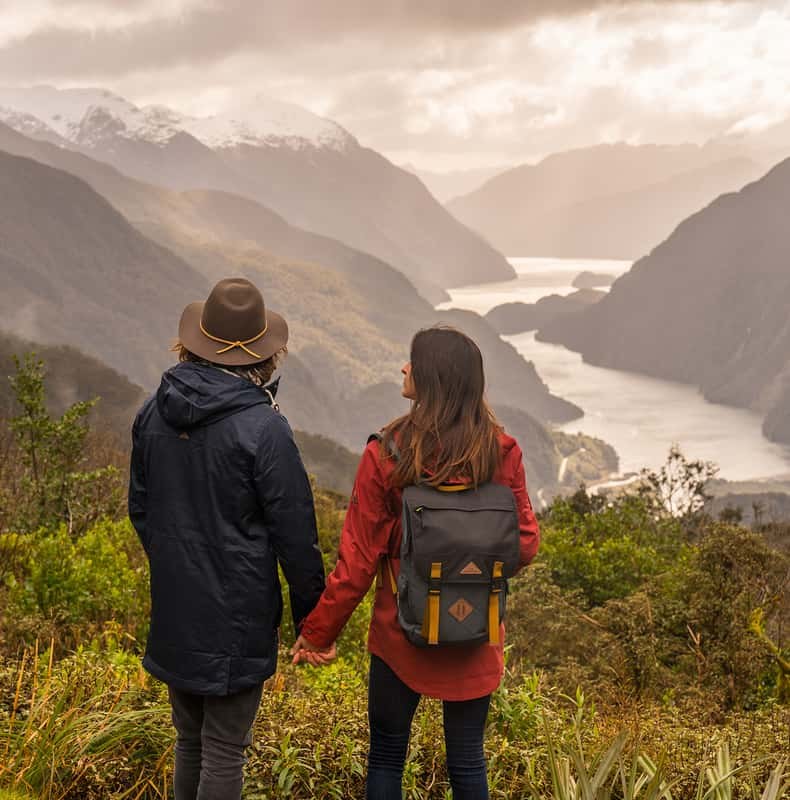
Eight and a half hours from Lakefront Drive in Te Anau: the coach to Manapouri, the lake, the pass and a 3-hour cruise. Food on sale on board, card only.
From $216 per person
Check Availability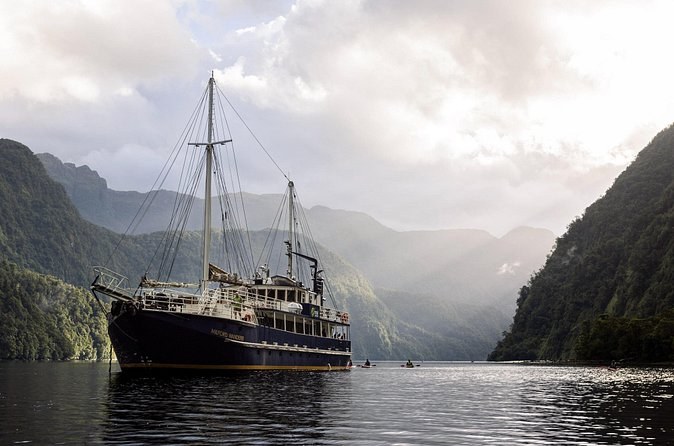
About 20 hours on the fiord: an afternoon cruise, a three-course dinner, a cabin at anchor and breakfast on the water. Booked in twos, and non-refundable.
From $462 per person, bookings of two
Check AvailabilityNext: see things to do around Doubtful Sound, check the FAQs, or compare every tour on Doubtful Sound Tours.