Doubtful Sound Facts That Surprise Almost Everyone
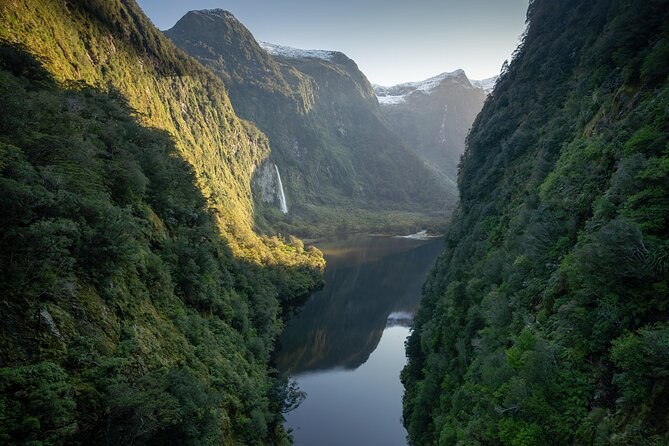
The short answer. Doubtful Sound is not a sound, the explorer who named it never went in, and the only road to it joins no other road in New Zealand. It is the deepest of the country's 14 fiords, it has fresh water floating on the sea, and a petition signed by nearly one New Zealander in ten saved the lake you cross to reach it. These are the facts to know before you book Doubtful Sound New Zealand tours.
The name
1. It is a fiord, not a sound
Despite the name, Doubtful Sound is a fiord, like every other inlet on this coast. The name came from the whalers and sealers who worked here many years after the first European saw it, and it stuck.
2. The explorer who named it never went in
Captain Cook sailed past the entrance in 1770. From the sea it was only just visible, and it looked doubtful that a ship could sail back out against the prevailing westerly wind. So Cook called it Doubtful Harbour and sailed on. The fiord you will cruise stayed a line on a chart.
3. Its first name means the place of silence
Early Māori called it Patea, the place of silence. You will understand why the moment your boat stops its engines in one of the arms and all you hear is water.
The shape of the fiord
4. It is the deepest fiord in New Zealand
It reaches 421 m, the deepest of the country's 14 fiords, and it runs 40 km from its head to the Tasman Sea. It branches into three arms, so there is more fiord than a single cruise can cover.
5. Nobody lives there
There is no town on the fiord. Deep Cove, at its head, has an outdoor education centre and a small fleet of fishing boats that work for cod and crayfish. That is all. When the day boats leave, the fiord is left to the overnight boat and the birds.
6. It is larger than Milford Sound, and far less visited
Visit Fiordland calls Doubtful Sound larger, yet less visited, than Milford Sound. The difference is the road. Milford has one; Doubtful has a lake and a pass in the way. How the two compare for your trip is on Doubtful Sound and Milford Sound compared.
The water
7. Fresh water floats on top of the sea
Fiordland gets so much rain, around 6 m a year here, that a permanent layer of fresh water lies on top of the salt. DOC puts it at 5 cm to over 10 m deep, stained the colour of weak tea by the forest. It cuts out the light, so most marine life lives in the top 40 m.
8. There is coral in the dark
The fiords hold one of the world's largest populations of black coral trees, about 7 million colonies, DOC says. In the inner fiord, a marine reserve of about 613 hectares surrounds Elizabeth Island.
The animals
9. Its dolphins are among the southernmost in the world
The fiord shelters New Zealand's southernmost population of bottlenose dolphins. DOC counted 56 in 2008, a third fewer than in 1994, and numbers have slowly risen since. The boats now follow a code: no entering the protection zones when dolphins are there, and no seeking them out. If they come to your boat, it is their choice.
10. Its penguin lives nowhere else
Tawaki, the Fiordland crested penguin, is found only in New Zealand, with 2,500 to 3,000 breeding pairs by DOC's estimate. They breed from July to November. The rest of the animals, and how to improve your odds, are on Doubtful Sound wildlife.
The road and the power
11. The road to it joins no other road
The road over Wilmot Pass was built from 1963 to 1965 to haul loads of up to 97 tonnes from ships at Deep Cove to the power station. It is the only road on the New Zealand mainland that connects to no other road. You reach it by boat, and the coaches that drive it stay on the far side of the lake.
12. The power station is inside a mountain
The Manapouri Power Station at West Arm has its machine hall 200 m below the level of the lake. Its water runs out through a tunnel about 10 km long to Deep Cove, and a second tunnel was finished in 2002. Work began in 1964 and the station was commissioned in 1971.
13. A tenth of the country signed to save the lake
The first plan would have raised Lake Manapouri. The Save Manapouri campaign's 1970 petition gathered 264,907 signatures, nearly one in ten New Zealanders, and the lake was not raised. You cross it on the way in. The full story is on the Doubtful Sound history page.
The seasons
14. Winter is the calmest time on the fiord
You would expect winter to be the worst season for a trip. Visit Fiordland calls June to August the most settled time of year, often with clear blue days, snow down to low levels and sometimes even ice on the fiord. Spring, not winter, is the wettest and most unsettled. The catch is the light: in winter the day runs from about 8:30am to 4:30pm, against about 5:30am to 9:30pm in summer. Month-by-month advice is on the best time to visit Doubtful Sound.
The numbers at a glance
| What | Figure | Why it matters to you |
|---|---|---|
| Depth | 421 m | The deepest fiord in the country |
| Length | 40 km | From the head to the Tasman Sea |
| Arms | 3 | More fiord than one cruise covers |
| Rain a year | Around 6 m | Bring a waterproof, expect waterfalls |
| Height of the pass | 671 m | Your first view of the fiord |
| Signatures, 1970 | 264,907 | Why the lake looks as it does |
What these facts mean for your visit
- You will not drive to the fiord, so book a trip from where you are staying.
- Rain is part of the deal, and it makes the waterfalls.
- Wildlife is a bonus, never a promise.
- The quiet is the point, so time the engines-off stop for photos, not talk.
For the practical side, from check-in to packing, read how to visit the fiord. For the plan in weather terms, see the Doubtful Sound weather page.
Trips that give you the most of the fiord
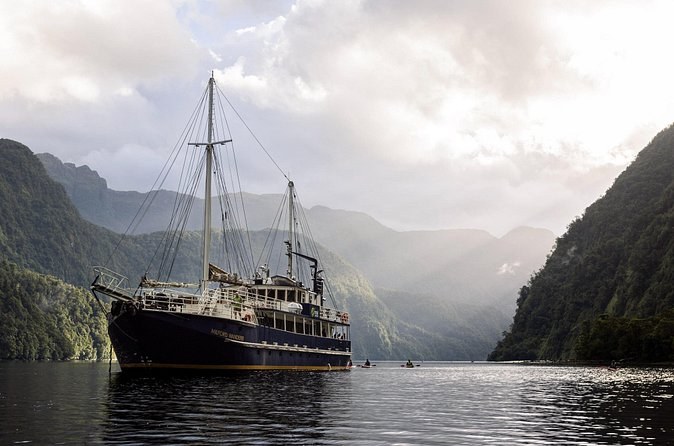
Doubtful Sound Overnight Cruise
About 20 hours on the fiord: an afternoon cruise, a three-course dinner, a cabin at anchor and breakfast on the water. Booked in twos, and non-refundable.
From $462 per person, bookings of two
Check Availability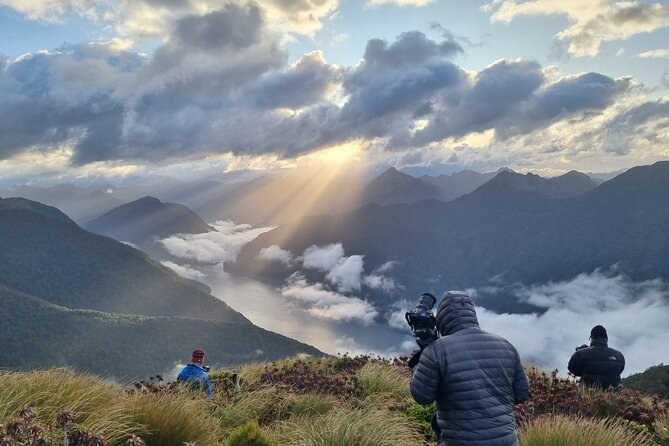
Doubtful And Dusky Sound Helicopter Scenic Flight from Te Anau
Ninety minutes from Te Anau Airport over two fiords, landing above each, with the pilot's commentary through headsets. 120 kg limit per passenger.
From $897 per person
Check Availability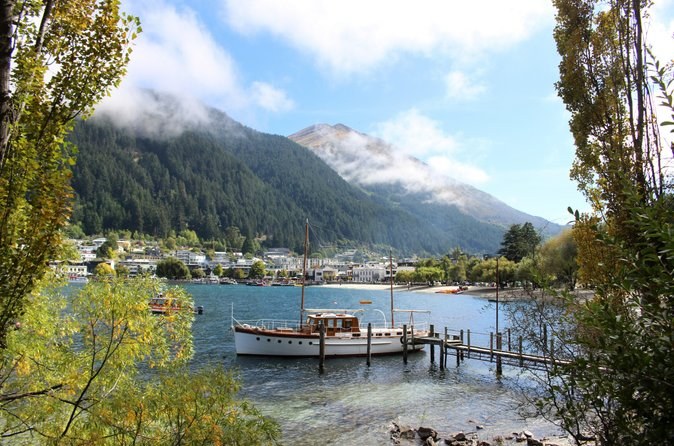
3 Day Doubtful Sound Overnight Cruise and Glowworm Tour from Queenstown
Three days from Queenstown: a hotel night in Te Anau with the glowworm caves, then a night at anchor on the fiord with dinner. Non-refundable.
From $1,239 per person
Check AvailabilityNext: Pick the way in that gives you the most hours with the fiord, then check the dates. Every fare sits side by side on Doubtful Sound Tours.